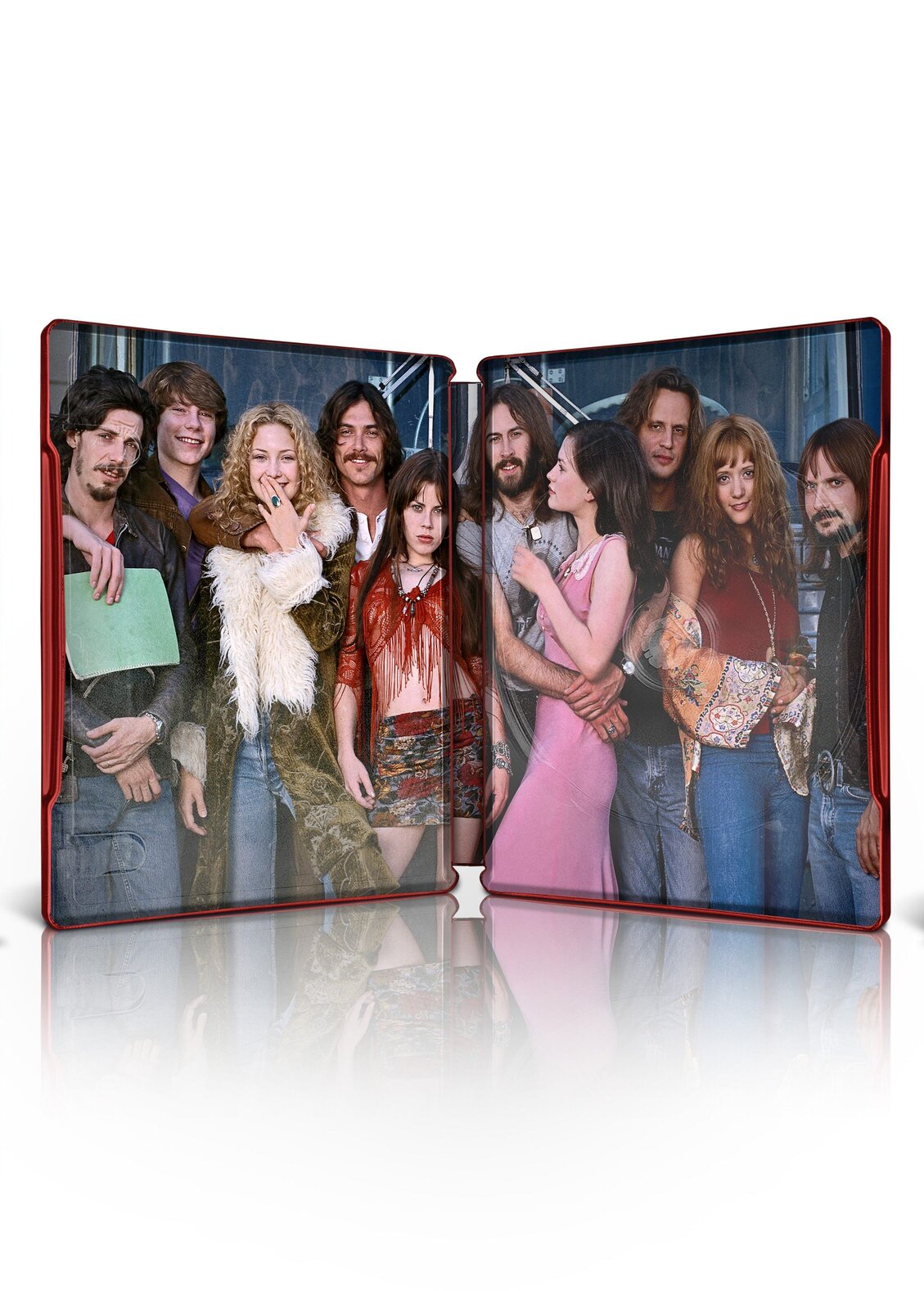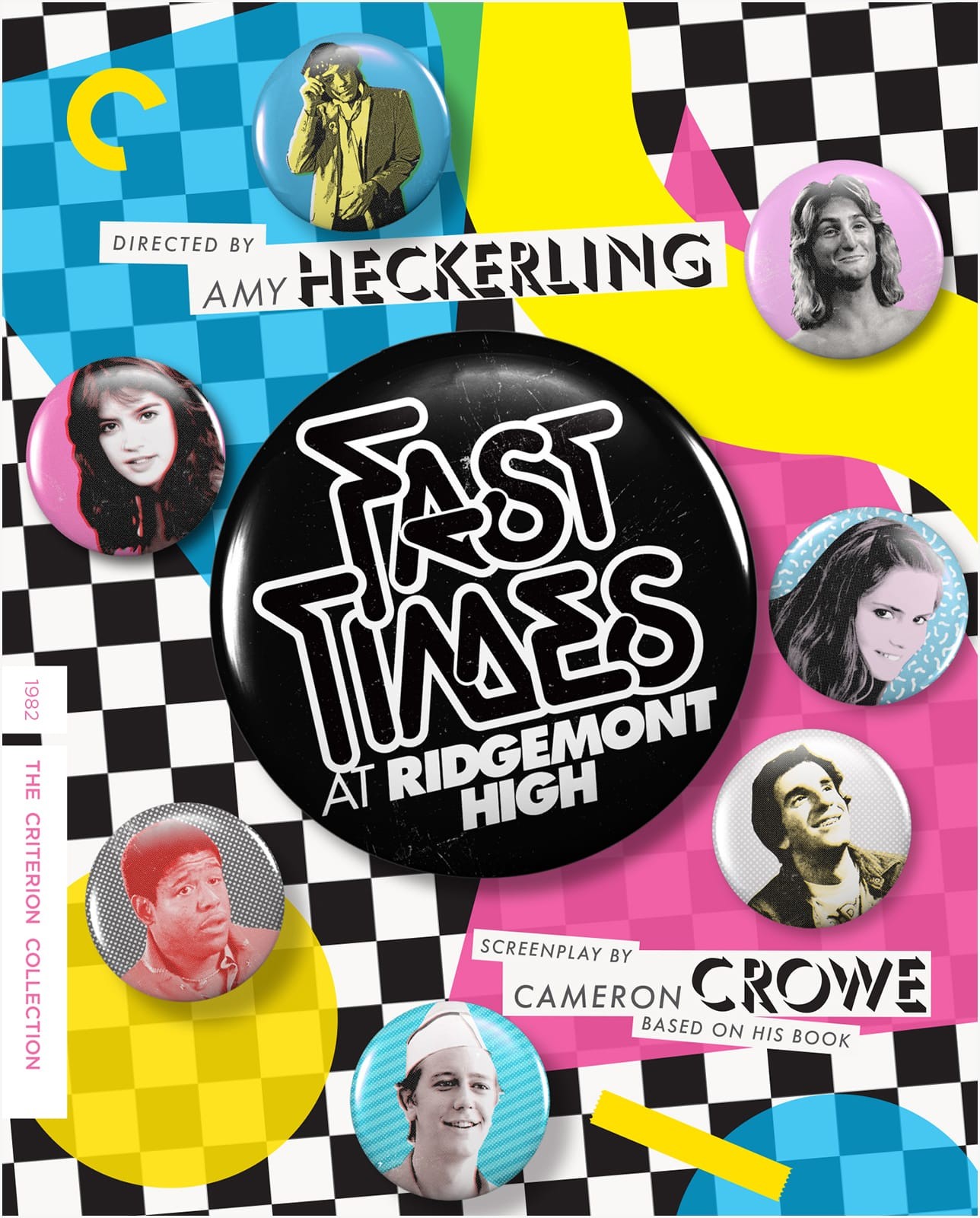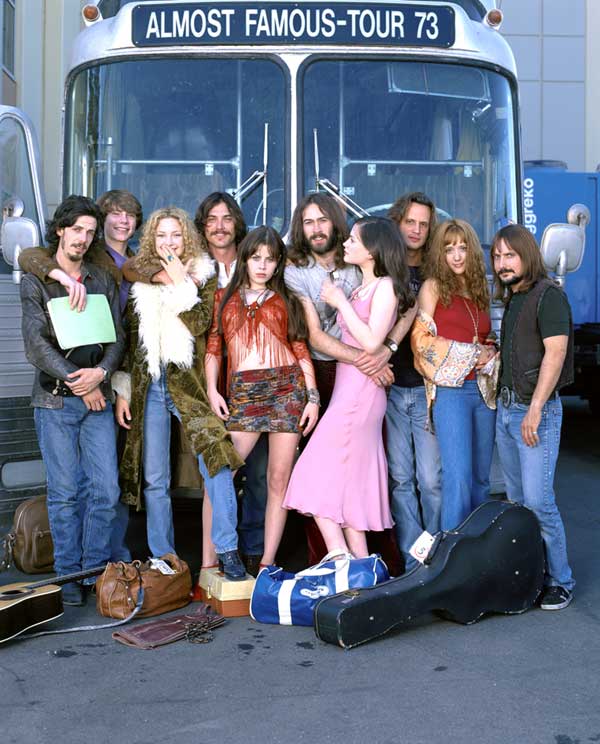
With the recent release of History of the Eagles on Blu-ray and DVD, it made sense to revisit Cameron’s Rolling Stone cover story from September, 1975.
Even though the Carrie remake (starring Chloë Grace Moretz) was recently pushed back to October 2013, we still wanted to debut this 1979 Rolling Stone cover story and interview with the original Carrie, Sissy Spacek. The topic of Carrie is covered, along with Badlands, Coal Miner’s Daughter, some projects that didn’t quite get off the ground, Sissy’s musical background and much more. It’s a 6,500 word journey and we hope you take the trip with us.
Vanity Fair has released their first comedy issue with guest editor Judd Apatow (with three unique covers). Contributers to the issue include Chris Rock, Conan O’Brien, Lena Dunham, Zack Galifianakis, the making of the Blues Brothers and much more. Cameron shares a new article entitled “Rocking the Role” about musicians who shine in acting roles. We will have that piece in the near future. In the meantime, check out the January Vanity Fair issue on store shelves now.
Cameron sits down for a chat with Emma Stone in the latest issue of Interview magazine. They talk about how Emma grew up on 70s and 80s comedy, heartbreak, her filmography, The Apartment and much, much more. We hope you like it.
Storyboard Artist Alex Hillkurtz has been working in the industry since 1993. He has worked on a wide variety of films during his career including the last four of Cameron’s films. We sat down for a two-part chat to learn more about his background and his variety of projects.
Is it true that you were born in England? When did you come to the States? Are you an American citizen?
I was born in England. My parents are British but we moved to Northern California when I was a baby, so I’ve grown up here. I quickly learned to speak American when teased in kindergarten about my British accent. I now have dual citizenship, so I feel like Jason Bourne when traveling with more than one passport. I’m sure having my feet planted on both sides of the Atlantic helps me to see things from different perspectives, but I can fluctuate between feeling at home on either continent, to feeling a complete outsider no matter where I call home.
How old were you when you knew you had some artistic talent?
I don’t remember a time when I wasn’t drawing. I was always that kid in the back of the class drawing space ships and dragons. I think it’s served me well.
Did either of your parents have that skill?
My mom does really nice pen and ink illustrations, and her father before her did some beautiful sketches during his time in WWII. I feel privileged to be the first generation in my family to actually make a living with art.
How did that early talent manifest itself? What types of things were you drawn to?
I would fill reams of paper with drawings of dinosaurs, that was my early training. Maybe I should’ve spent my childhood drawing earnest and off-beat romantic characters instead. I was never a real comic book fan (though I know a lot of storyboard guys come from that tradition), but I was always a movie fan. My parents would take me to revival houses to see things before I could understand what I was seeing – Wages of Fear, Creature From the Black Lagoon, 2001: A Space Odyssey. And I was always drawing, just dumping my imagination on the page. Later for me came painting and watercolors.
Did you go to a trade school specifically for art, or did you go to a traditional University?
I went to Chapman University through their film program. That’s where I learned how to make movies – directing, cinematography, lighting, editing, sound, the whole thing. I came out of there with a good grasp on what it takes to make a film.
How did you get your first industry job as a storyboard artist?
I was a production assistant for a while after graduation and was shocked that no one wanted to hire me as a director! It was a pretty rough awakening after film school. I knew I could draw, so when I was working on Phantasm 3, I asked director Don Coscarelli if I could do some storyboarding, and he let me have a crack at a few sequences. I was in heaven. I got my first screen credit as a storyboard artist on that film, a big moment for me. I figure it was a win-win, because they got boards for a PA rate. From there I just started telling people that’s what I did, and some of them actually believed me.
Was working in film something you’ve always wanted to do?
When I was real little I wanted to be a paleontologist, I wanted to dig up dinosaur bones in exotic lands. Then I saw Star Wars. I think half the people in the industry today trace their spark back to that moment in 1977. But it was the first time that a film aired “making of” programs on TV, and I could see that these magical things called movies were made by mere mortals. I got my hands on my dad’s Super-8 camera and suddenly my room was my movie studio, the back yard was an alien jungle planet. I made stop-motion comedies, spaceship battles, jungle dinosaur adventures, clay-mation spacemen on a paper mache moonscape…
Little did you know, the movie that sparked your love of film was produced by your future Father-In-Law, Gary Kurtz! Some of your credits are under Alex Hill and others are listed as Alex Hillkurtz. Why the two different names?
My wife (ed. Tiffany Hillkurtz, an esteemed film editor and daughter of producer Gary Kurtz) and I combined our names when we got married. I’m a Hill, she’s a Kurtz. We thought it would be a cool thing to do and much better than a hyphen. The only debate was weather to go with Hillkurtz or Kurtzhill, or some scramble like Kilohertz. It’s fun to see the reactions of friends from high school or college who knew me then.
As an X-Files fan, I noticed you worked on the series back in 1999. What did you take away from that experience?
X-Files was a real eye-opener for me. Those guys worked so hard to achieve so much in so little time. In a lot of ways it felt like I was back in film school with a tight crew doing their best to achieve greatness. It was also when I met director Rob Bowman who was really open to suggestions. In our first meeting – he was filming an upcoming episode, so we would chat between takes – he treated me like a fellow filmmaker. He’d give me notes, but also wanted my take on things, and I felt comfortable enough to give it. That was also the same year I worked on Almost Famous, so suddenly I found myself working with directors who were secure enough to genuinely invite collaboration.
Speaking of that. That was your first project with Cameron. How did Almost Famous come to your attention?
I had worked with Art Director Clayton Hartley on a couple things, so he brought me on to do set illustrations. It was there that I met Clay Griffith and they introduced me to Cameron and thought there might be a few sequences that storyboards would be useful for. Or maybe they just liked that I was always playing a lot of Peter Gabriel in the office.
Sky Movies HD released this video interview where Matt and Cameron interview each other. Topics includes Matt’s seeing Say Anything… in college, Good Will Hunting and We Bought A Zoo.
We Bought A Zoo will be released on April 3rd in both a Blu-ray + DVD + Digital Copy combo back and a standard DVD release in North America. We really think you will enjoy the extras, especially the hour plus documentary that covers the entire shoot of the film. Here’s all the details: